Nov 20, 2025
Blog

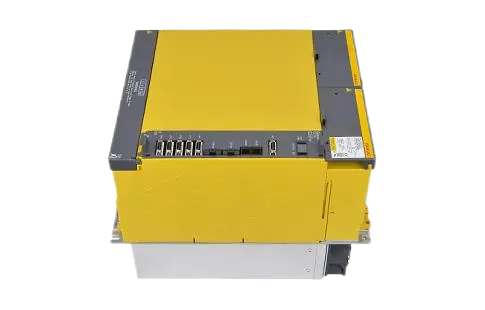
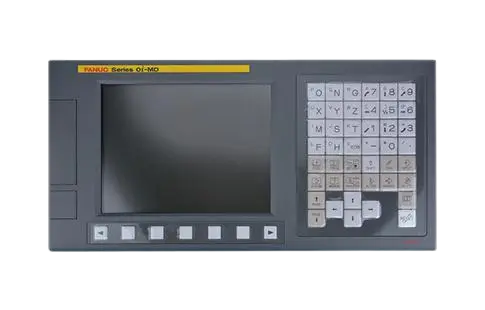

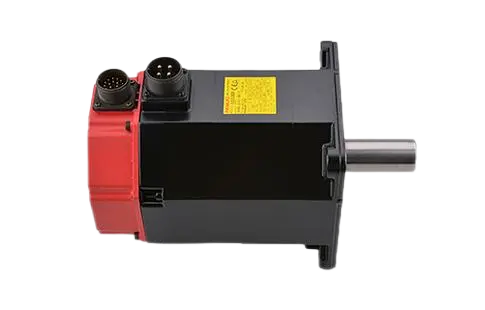
In the world of industrial automation and CNC systems, the terms servo drive and VFD (Variable Frequency Drive) are often mentioned side by side. While both are used to control motors, they serve very different purposes.
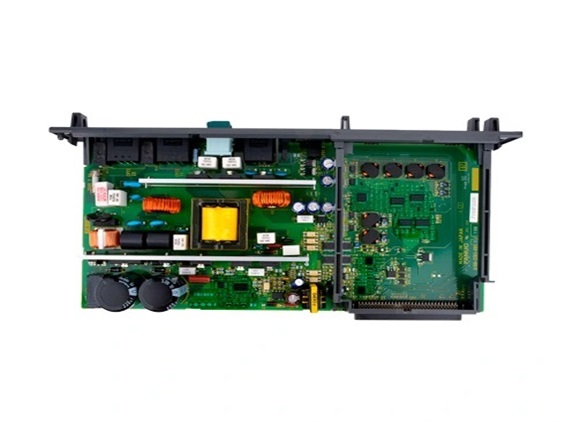
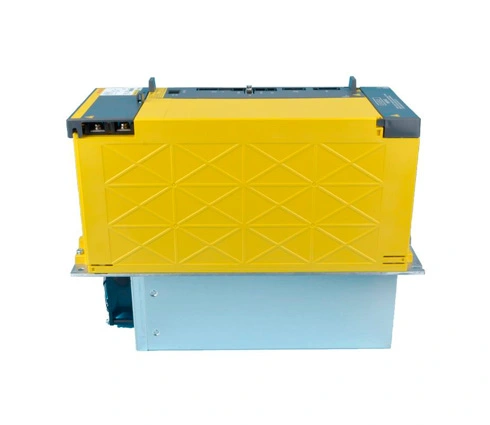
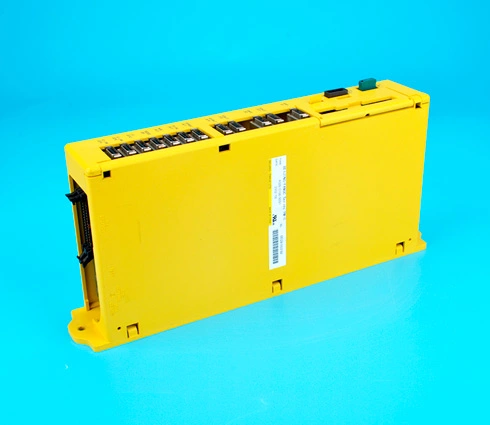
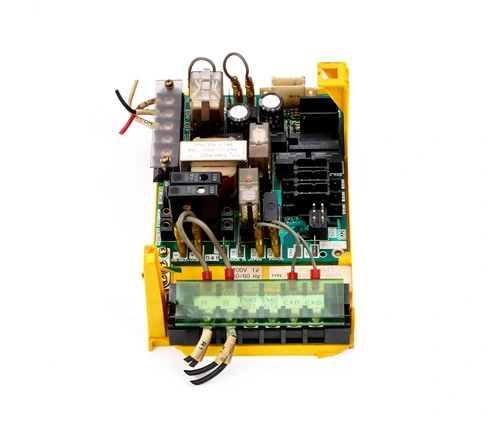
The short answer: No, a servo drive is not the same as a VFD. A FANUC drive—such as a servo amplifier module—operates with feedback-based precision control, whereas a VFD focuses primarily on regulating motor speed without the same level of positional accuracy.
A servo drive—like the FANUC αi series—is designed to control servo motors. These motors are essential f
or CNC machines, robotics, and high-precision automation.
Functionality: A servo drive regulates motor position, velocity, and torque by continuously processing feedback signals from encoders or resolvers.
Key Benefit: Enables micron-level accuracy and rapid response in dynamic applications.
Typical Use: Axis control in CNC machining centers, robotics joints, and multi-axis synchronized systems.
For example, a FANUC servo drive ensures that each axis in a CNC lathe cuts exactly where programmed—down to fractions of a millimeter.
A VFD is used for AC induction motors, primarily to control motor speed by adjusting the frequency of the supplied power.
Functionality: Regulates motor speed and torque, usually without high-level feedback integration.
Key Benefit: Energy savings and flexible motor speed control.
Typical Use: Pumps, fans, conveyors, and applications where speed regulation is more important than positional accuracy.
Unlike a FANUC drive, a VFD does not provide the precise feedback loop required for CNC cutting, drilling, or robotic tasks.
| Feature | Servo Drive (e.g., FANUC αiSV) | VFD |
Control | Position, speed, torque with feedback | Speed and torque only |
Feedback | Encoder/Resolver closed-loop system | Usually open-loop |
Precision | Micron-level accuracy | General speed regulation |
Application | CNC, robotics, automation requiring precision | Pumps, fans, conveyors, HVAC |
Motor Type | Servo motor | Induction motor |
Cost | Higher (due to precision and feedback) | Lower |
CNC machining and robotics cannot rely on open-loop speed control alone. A FANUC drive provides:
Closed-loop feedback for axis stability
Rapid acceleration/deceleration without losing accuracy
High torque at low speeds (critical for machining applications)
Integration with FANUC CNC controllers for seamless programming
For example, in a 5-axis machining center, a VFD would be unable to handle the synchronized motion required for complex contouring. FANUC servo drives are engineered for exactly these challenges.
Choose a FANUC Servo Drive if you need:
CNC axis control
Robotics motion precision
Synchronization of multiple axes
High-speed cutting or contouring
Choose a VFD if you need:
Simple speed control of pumps, fans, or conveyors
Energy savings in HVAC systems
General industrial motor control without precision requirements
A servo drive is not the same as a VFD—they are built for fundamentally different purposes. A FANUC drive offers the closed-loop precision and high-performance control demanded by CNC machining and automation, whereas VFDs excel in cost-effective, speed-controlled applications like pumps or fans.
For manufacturers and machine shops, understanding this distinction ensures you invest in the right drive technology for your equipment.
Can a VFD replace a servo drive?
No. A VFD cannot achieve the feedback-driven precision required for CNC or robotics applications.
Why are servo drives more expensive than VFDs?
They include closed-loop feedback systems, advanced electronics, and high-performance components designed for precision control.
Does FANUC manufacture VFDs?
No. FANUC specializes in servo and spindle drives for CNC and automation, not general-purpose VFDs.
What happens if I use the wrong drive type?
Using a VFD in place of a servo drive in CNC applications will lead to loss of accuracy, instability, and possible machine damage.